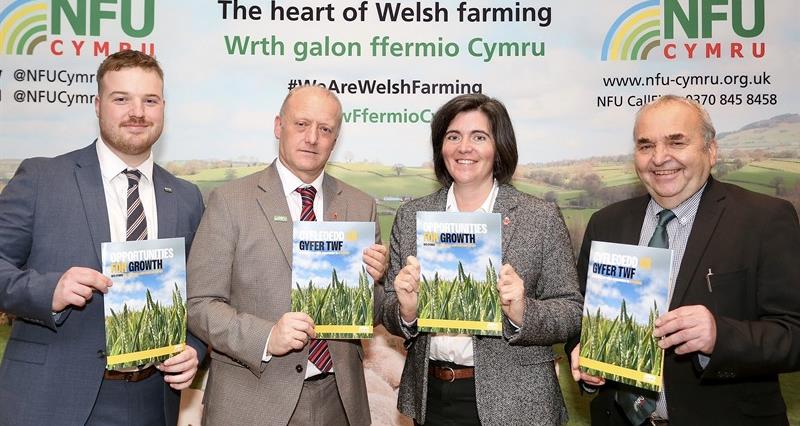
Paul Williams appeared before the Senedd’s Climate Change, Environment, Sustainability and Rural Affairs (CCESRA) Committee on Wednesday 11th November as part of the committee's inquiry into wildfire resilience and the future of Welsh abattoirs.
The oral evidence given by the NFU Cymru Deputy President follows written evidence submitted by the union to the inquiry last month.
In response to this summer’s unprecedented events, NFU Cymru has developed a 10-point strategy based on prevention, preparedness, co-ordinated response and recovery, which has been shared with the CCESRA Committee.
Increasing threat
Speaking after giving evidence to the CCESRA Committee, NFU Cymru Deputy President Paul Williams said: "Wildfires represent an increasing threat to Wales. During 2026 these fires caused extensive damage to significant tracts of land. Wales was, in fact, at the centre of the UK’s 2026 wildfire challenge, suffering a highly disproportionate wildfire impact, with the area lost to the blazes accounting for 57% of the total UK wildfire area.
Losing almost 15,500 hectares to wildfires was down to a combination of factors including the extreme weather and the build-up of fire-load, combined with accidental and intentional ignition.
Prevention not cure
"There are inevitably lessons to be learnt from what happened and so I was pleased to be able to present to the committee today and stress that we need to emphasise wildfire prevention, rather than responding to fires once they have started.
We therefore need to look at how we manage and control vegetation, as well as looking at grazing agreements in Wales and the unintended consequences which can stem from some aspects of government policy, along with how the agricultural industry is regulated.
Many of these areas are contained within the 10-point NFU Cymru wildfire strategy we have supplied to the committee and I hope committee members give these proposals the serious consideration they deserve."
Mr Williams also paid tribute to those who had assisted in tackling wildfires over the summer, adding: "It is important that we thank all those involved in combating this summer’s blazes, including the fire service, the military, local farmers and rural communities who all pulled together so magnificently."