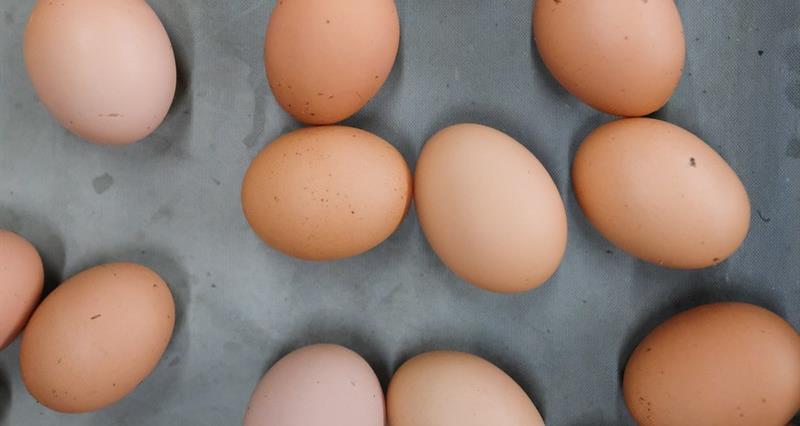
Whenever the words ‘Salmonella’ and ‘eggs’ appear together, it risks damaging consumer confidence in an industry that has spent decades investing in food safety, traceability and assurance.
The most important message to make clear is that there is currently no evidence that UK-produced eggs are affected. Investigations so far have identified potential links to eggs imported into the UK from abroad, particularly eggs supplied into food-service and catering businesses, such as restaurants and cafés.
The British egg industry has worked tirelessly for many years to strengthen Salmonella controls and maintain some of the highest food safety standards in the world.
Enormous investment
Farmers have invested enormously in vaccination, biosecurity, testing, hygiene and traceability. Assurance schemes such as the British Lion and Laid in Britain provide additional safeguards and give consumers confidence about how their eggs have been produced.
These standards aren't simply a logo on the box. Behind that logo are farmers, vets, feed companies, packing centres and many others working every day to protect the food chain, which comes at a cost.
British farmers are rightly expected to meet extremely high standards. But if we expect those standards from our own producers, I believe we should also be asking that food imported into the UK is produced to equivalent standards, which I fear it is not.
Traceability
This outbreak, it would appear, is pointing towards eggs that are eaten outside the home, in cafes and restaurants where it is not as easy to trace the origin. The current Salmonella scare should prompt a wider discussion about how the UK supports investment in modern poultry production.
In 2025 the UK is believed to have produced 12.5 billion eggs, yet the consumption is 14.5 billion eggs, meaning we are about 89% self-sufficient. Food safety, biosecurity and supply-chain resilience are all closely linked to the quality of the buildings and systems farmers are able to invest in.
Modern poultry units can offer significant advantages over older infrastructure, including improved hygiene controls, better ventilation, stronger pest management, clearer separation between clean and dirty areas, and more effective cleaning and disinfection.
Uncertain planning processes
Yet across parts of the UK, and particularly in Wales, poultry farmers can face lengthy, costly and uncertain planning processes when trying to replace, modernise or expand existing units.
That creates an important policy question. If government wants the highest possible standards of food safety, animal health and biosecurity, should the planning system make it easier for responsible farmers to invest in the infrastructure needed to deliver those standards?
The answer should not be unrestricted development. Poultry applications must continue to meet appropriate environmental, welfare and community safeguards. However, there is a strong case for giving greater planning weight to developments that can demonstrate clear improvements in biosecurity, food safety, welfare and environmental performance.
The issue also extends to food security. The UK benefits from having a strong domestic egg and poultry sector with high levels of traceability and oversight. If planning barriers prevent domestic producers from investing and maintaining capacity, the country risks becoming increasingly dependent on imported food.
Opportunity to reconsider
Imports themselves should not be portrayed as unsafe, but a healthy domestic industry gives the UK greater resilience and greater visibility across its supply chain.
For Wales, the current debate presents an opportunity for Welsh Government and local planning authorities to reconsider how strategically important agricultural developments are assessed. A faster and more consistent route for poultry developments that improve biosecurity, welfare and environmental performance could help farmers modernise while maintaining robust safeguards.
Recent food-safety concerns therefore reinforce a wider message: planning policy should not simply regulate poultry development; it should actively support responsible modernisation. A resilient domestic food system depends on farmers being able to invest in the infrastructure required to produce safe, traceable and high-quality food.
Timely reminder to all
I could go on about this forever, however it is important to put the situation into perspective. The UK Health Security Agency (UKHSA) currently assesses the risk to the general public as low.
This isn't a reason to stop eating eggs. Quite the opposite. Eggs remain one of the most nutritious, versatile and affordable foods available.
But the current outbreak is a timely reminder of something British farmers have been saying for years: buy British, buy local and next time you are in a café or a restaurant, maybe ask where their eggs have come from.
More from NFU Cymru: