Below is a glossary of key terms to help explain how the Senedd operates and how decisions are made.
Backbencher – a Senedd Member who does not hold office in government nor an official position in opposition.
Barnett Formula – the formula used to calculate the annual change to the baseline amount of funding given by the UK Treasury to the Devolved Governments of Wales, Scotland and Northern Ireland. It is intended to ensure that changes to funding for public services in England are reflected with a proportional change in the amount funding per head of population in the devolved nations.
Coalition – a formal arrangement or deal where more than one political party agree to form a government, usually when the parties have similar policies or chose to compromise. This normally occurs when no one single party wins a majority of seats.
Code of Conduct – the rules and guidance Members of the Senedd are expected to follow and discharge in the duties as an elected official.
Confidence and supply – the term for an arrangement where a minority government receives support from one or more party on particular votes. This tends to be a more informal option than a full coalition and is used on key votes such as the Budget, flagship government policies or matters of confidence. Given the proportional system of May 2026, a minority government may be elected and choose to enter into such an agreement.
Constituency – the 16 geographic areas of Wales, formed by combining two Westminster constituencies, that each elect six Members of the Senedd (MS) under the closed list proportional representation system.
Devolution – the transfer of power and jurisdiction from higher to lower levels of governance. In the Welsh context this refers to the devolution of legislative and executive functions from Westminster and Whitehall to the Senedd and Welsh Government, a process which began in 1999.
Dissolution – the formal term for the end of each parliamentary term.
Exit Poll – the opinion poll that asks people how they voted as they are leaving the polling station. Often the first indication of the election’s results and published to kick off coverage of election day.
First Minister – the Member of the Senedd nominated by the Senedd to be appointed by the Monarch to lead the Welsh Government. The First Minister will almost certainly be the leader of the largest party at the Senedd and appoints other Welsh Ministers to form a Cabinet. He or she is the highest elected official in Wales.
Legislature – another word for the Welsh Parliament or Senedd Cymru where new laws are debated in the form of legislation or bills.
Llywydd (Presiding Officer) – the Senedd Member elected by other members to chair Plenary and ensure that the Standing Orders are followed. They are elected on the first day of the new Senedd, act impartially in their role and do not usually vote in Senedd proceedings. The Llywydd is supported in his or her role by Deputies.
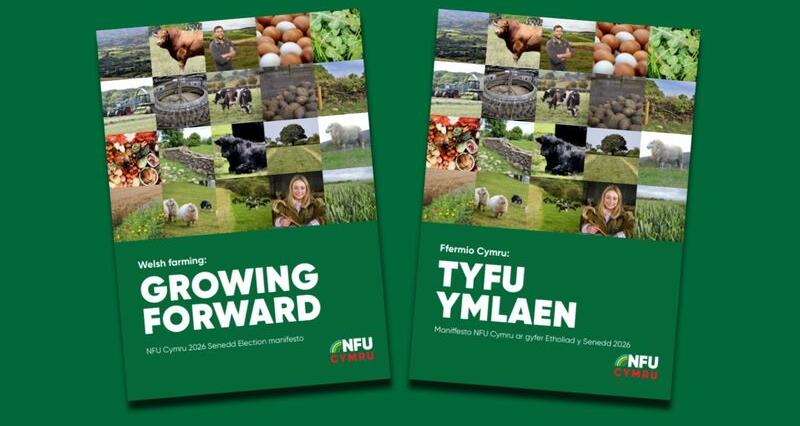
Manifesto – the document listing policies and pledges made by a political party or individual which they would wish to implement if they were to form a government. Usually published before an election.
Member of the Senedd (MS) – the 96 individuals elected to represent the 16 constituencies in the Senedd.
Opposition – the Members of the Senedd who are not members of the governing party. Members of an opposition party may take official spokesperson or ‘shadow’ roles to scrutinise the governing party.
Plenary – the full meeting of all Senedd Members in the Siambr (the Senedd buildings main chamber). Plenary currently takes place on Tuesdays and Wednesdays but is expected to change after the May 2026 election.
Proportional representation – an electoral system designed to produce a result where the number of seats corresponds in proportion to the number of votes received. The system used in May 2026 will be a Closed List Proportional Representation system.
Register of Members’ Interests – a record of the ‘Financial and Other Interests’ of elected Senedd Members including donations, secondary incomes and employment of family members.
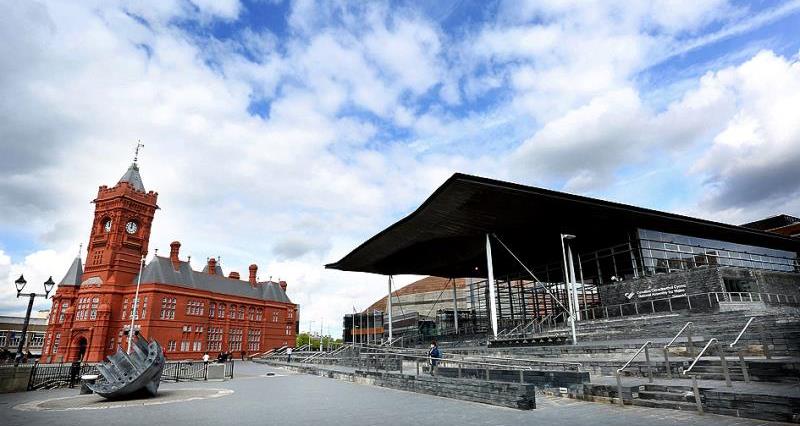
Senedd Cymru (Welsh Parliament) – the democratic institution consisting of 96 MS from across Wales to represent the public, make laws, agree tax and spending measures and scrutinise the Welsh Government and hold it to account. Formally known as the Welsh Assembly until 2021.
Swing Voter – a voter believed to still be undecided ahead of polling day who could potentially ‘swing’ to any of the candidates up for election. They are often heavily targeted by parties as they can be a large section of the electorate.
The Welsh Government Civil Service – This is the organisation which serves Welsh Ministers with civil servants employed by the Crown to work within Welsh Government departments to help develop and implement policies determined by Welsh Ministers. The Welsh Government Civil Service is part of the UK-wide home civil service and is headed by a Permanent Secretary. Civil Servants are expected behave impartially and must work with any governing party.
Welsh Government – the executive body with governing responsibility for Wales consisting of the First Minster, Cabinet Secretaries, Welsh Ministers and Counsel General. From 2026 there can be up to 17 individual MSs in Government, not including the First Minister and Counsel General. All members of the Welsh Government, barring the Counsel General, must be Members of the Senedd.