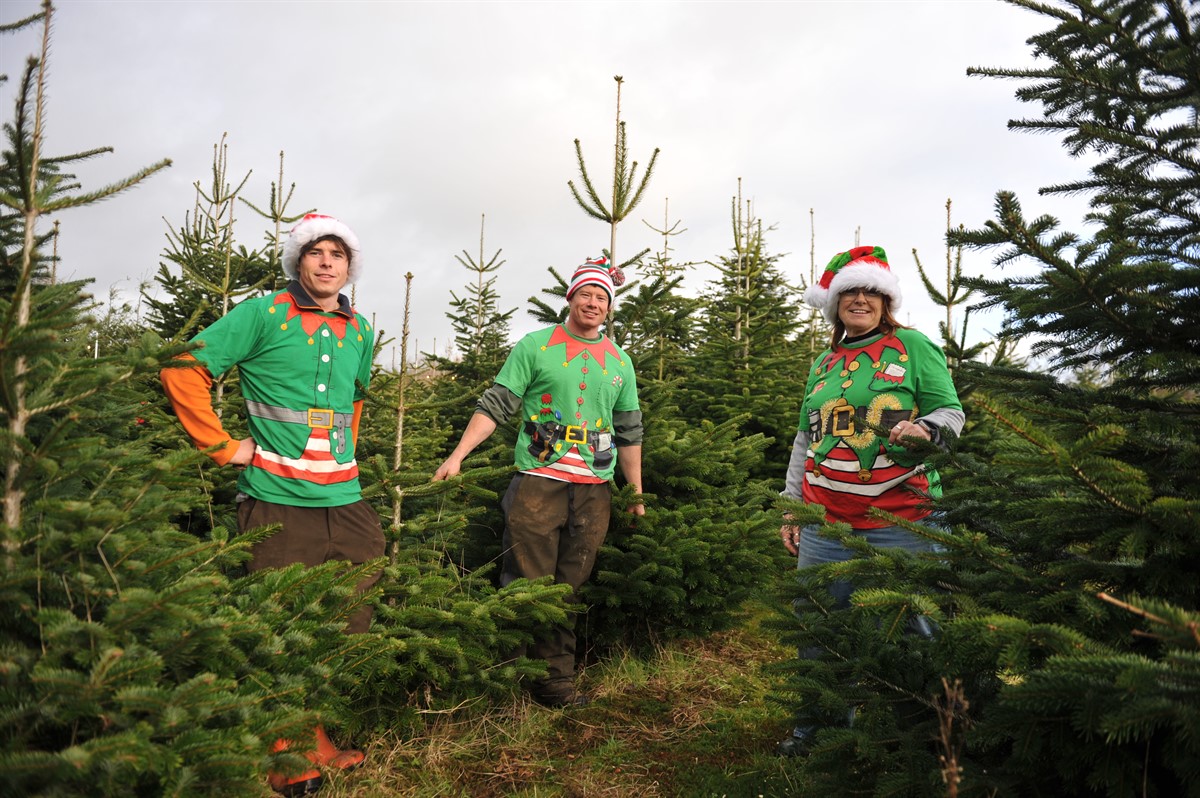
For many of us, Christmas starts with a tree purchase and, judging by the throngs of people who have ventured into the cold to procure their own from Ty Cerrig farm, that family ritual starts earlier every year.
It is only November but for Stephen and Helen Reynolds and their sons, the last week of autumn is in fact their busiest period for sales of the Fraser firs, Norway spruces and Nordmann firs grown on their 180-hectare farm at Knighton.
In a single season they can shift up to 40,000 trees so there is every chance that the origins of the tree many of us will adorn with tinsel and baubles this year could be traced back to Black House Farm.
Tree planting
Stephen planted the first tree there in 1995 to supplement income from the beef and sheep farm, an enterprise he initiated on a wing and a prayer as he had no-one to turn to for advice and zero experience – he had been earning a living as a pianist in a rock band, supporting bands like the Electric Light Orchestra.
Stephen and Helen were expecting their first child, Charles, who is now 30 and works in the business with two of his siblings, 26-year-old William, and Alfred, 24; the couple’s daughter, 28-year-old Kate, is a teacher.
With a baby on the way, earning a living by touring with a band was no longer sustainable.
Light-bulb moment
Growing Christmas trees offered an alternative – Stephen had a light-bulb moment when he saw trees for sale on the roadside and thought he would give cultivation a go.
His neighbours who, like Stephen’s family were livestock farmers, thought he was mad. “He got a lot of stick, they all thought he was crazy,” laughs Charles.
Those farmers did get the satisfaction of a ‘told you so’ moment a couple of years later when it was evident that the first plantings, all 2,000 saplings, had died, victims of frost.
“It was a tough way to discover that you can’t plant trees at the bottom of a valley,” Charles reflects.
Christmas trees don’t tolerate frost, neither standing water - reasons why they must be grown on a slope and the steeper the better.
Financial blow
Losing those trees was a financial blow as Stephen lost that investment and, instead of the 10-year lag to turn a profit from a single tree, for him it was 11.
But success often follows failure and subsequent plantings on steeper terrain did well.
Eleven years later came the next challenge – how to sell those trees.
Stephen drove around Wales with trees on board, trying to sell his wares to potential customers, and struck lucky at a garden centre in Shrewsbury. Clinching the deal came with an unusual bargaining chip though.
He pledged to play Christmas carols on the centre’s piano on its busiest weekend of the festive period, dressed as Santa.
Those customers were in for a treat because in the years before the trees matured Stephen continued to work in music, as a classical pianist and as a music teacher at a private school in Shrewsbury.
His entrepreneurial streak also saw him operate a bus company for a number of years, ferrying children to and from school on board Lakeline of Powys coaches.
The tree business has since flourished and with around 400,000 at varying stages of growth planted at Black House Farm, he now concentrates full-time on that enterprise, one that provides work for about 30 staff, including family members, hauliers and contractors.
How to grow a Christmas tree
From small acorns, mighty oak trees grow but for the Christmas tree it is a seed produced by a mature tree and each of those linked to one specific country, Georgia.
“That is where all Christmas trees originate, one region in Georgia,” Charles explains.
“There will be 30 foot trees that have been growing there for years and the seeds are picked from those.”
After buying the seeds, the Reynolds family outsource the growing-on to a company that has a 50ha polytunnel site in Denmark.
“If we tried to plant the seeds on the farm we would have too many misses, it would cost too much in land,” says Charles.
From seed to sapling
From seed to sapling, the three-year process costs around 75p for a 30cm sapling.
Stephen once planted each with a spade but that job is now mechanised and, thanks to GPS, it doesn’t even require an operator to be in the tractor cab.
Trees are planted in a diamond configuration, a metre apart to allow for grass mowing access.
Once planted, the work between then and harvesting the trees doesn’t stop as every year they must be pruned, leaders straightened, and every one of those jobs done by hand.
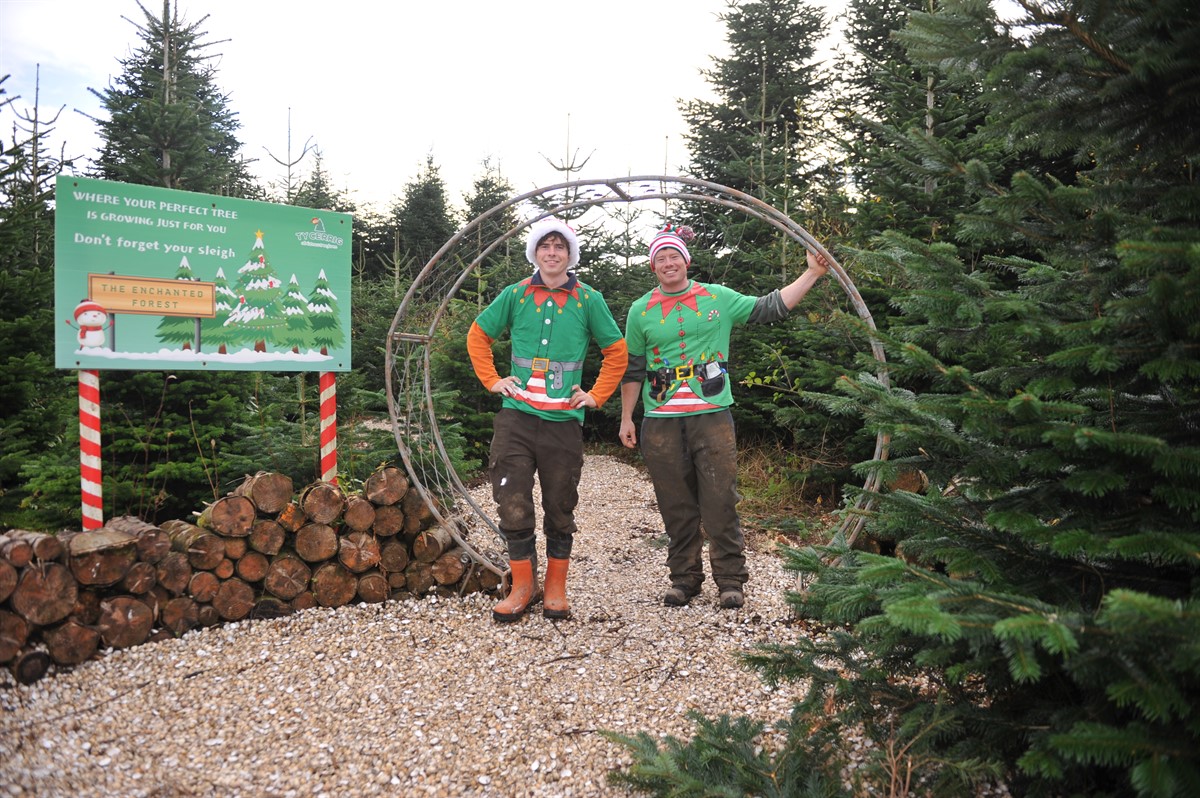
It was a task that the Reynolds children were assigned when they were growing up, one so repetitive that Charles jokes it was the reason why he and William invested in a mobile toilet business, one that demands their time when they are not busy with trees.
“We decided we would rather clean loos than prune trees!” Charles admits.
“It might only take a minute to do one tree, a couple of days for a row, but then you have to do it again, tens of thousands of times.”
Staff are now employed to do this job, with five permanent full-time workers.
The tallest each tree will grow is eight foot so no ladders are needed.
Trees are harvested in a range of sizes to suit different price points – those that are sold direct to the end customer cost from £30 - £100, while for wholesalers it is closer to £10 - £30.
The tallest sold this year was a 30-footer, which now has pride of place on a village roundabout near Cardiff.
Most popular tree
The most popular species is the non-drop Nordmann fir followed by the Fraser fir, which Charles describes as a “pig to grow”.
“They have a nice smell and a blue tinge to the needles but they are like the sheep of the tree world, they do everything they can to kill themselves.”
Wastage is very low with the Nordmann but can be as high as 25% with Frasers.
The Norway spruce, which previous generations will be more familiar with, are now less popular because, as consumer demand for trees has shifted to much earlier in the season, needle losses can be high before the big day arrives.
Christmas starting earlier each year
That push for the festivities to start earlier every year is a problem when it comes to trees.
As soon as Halloween is done and dusted, families want to get started on Christmas.
It makes it more challenging for growers because every year there are more complaints of the trees not lasting, but it correlates with people bringing them into their houses earlier, Charles points out.
“Buying earlier is a massive trend, we now sell more trees in November than in December – we will close our Ty Cerrig site by 11th December because there is no point in being open as we won’t get any customers, by 1 December most people are done.
"Some customers will ring me in mid-December to complain that their tree looks a bit sad and tired but I then find out that they put it up in the second week in November.”
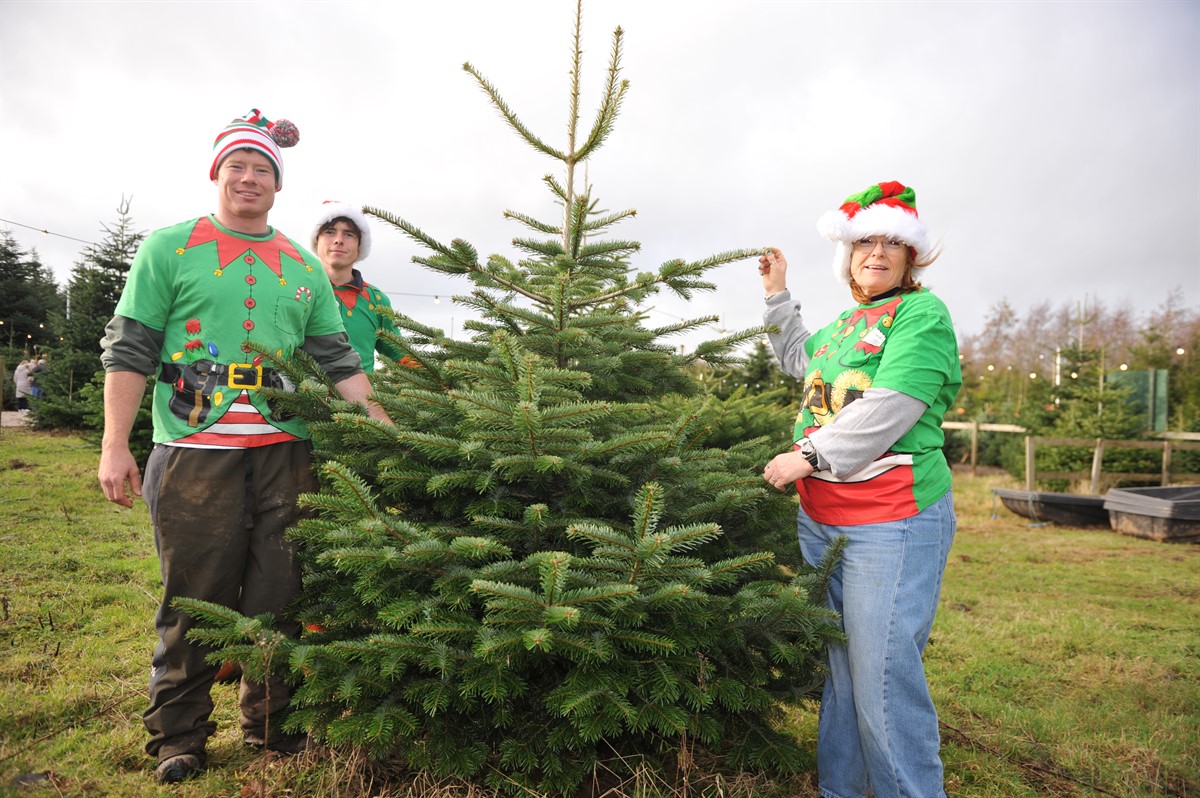
He compares it to buying Valentine’s Day flowers on Christmas Eve. “Those flowers aren’t going to last are they, but there seems to be an expectation that a tree will.”
His advice is to at least hold off until the beginning of December.
Customer type is different across the country – Ty Cerrig, tucked away in the countryside at Bonvilston near Cardiff and off the beaten track, is a ‘wellies on’ destination for families, while at the second retail site the family owns, at Keele, buyers turn up in high heels and white trainers, pulling up in their car to load a tree then leave.
The type of tree favoured by customers also has regional disparities. More Fraser firs are sold at the Keele site because they are narrow and suit the limited space of homes in more densely populated regions but at Ty Cerrig the bigger the better.
The Norway spruce is popular with Polish people because they don’t rush to put up their trees.
“They won’t bring their tree in until Christmas Eve and then have it up through the 12 days of Christmas, they like a Norway spruce because it is more traditional and it lasts because it is in the house for a shorter period,” Charles explains.
Artificial trees and the rise in their popularity haven’t dinted sales of the real deal, he suggests, although he does acknowledge that some are now so well produced that it is not always easy to spot a fake from a naturally-grown one.
“They used to be awful and expensive,” he reckons. “But I do think that people are in one camp or the other, real tree people will stay real tree people.”
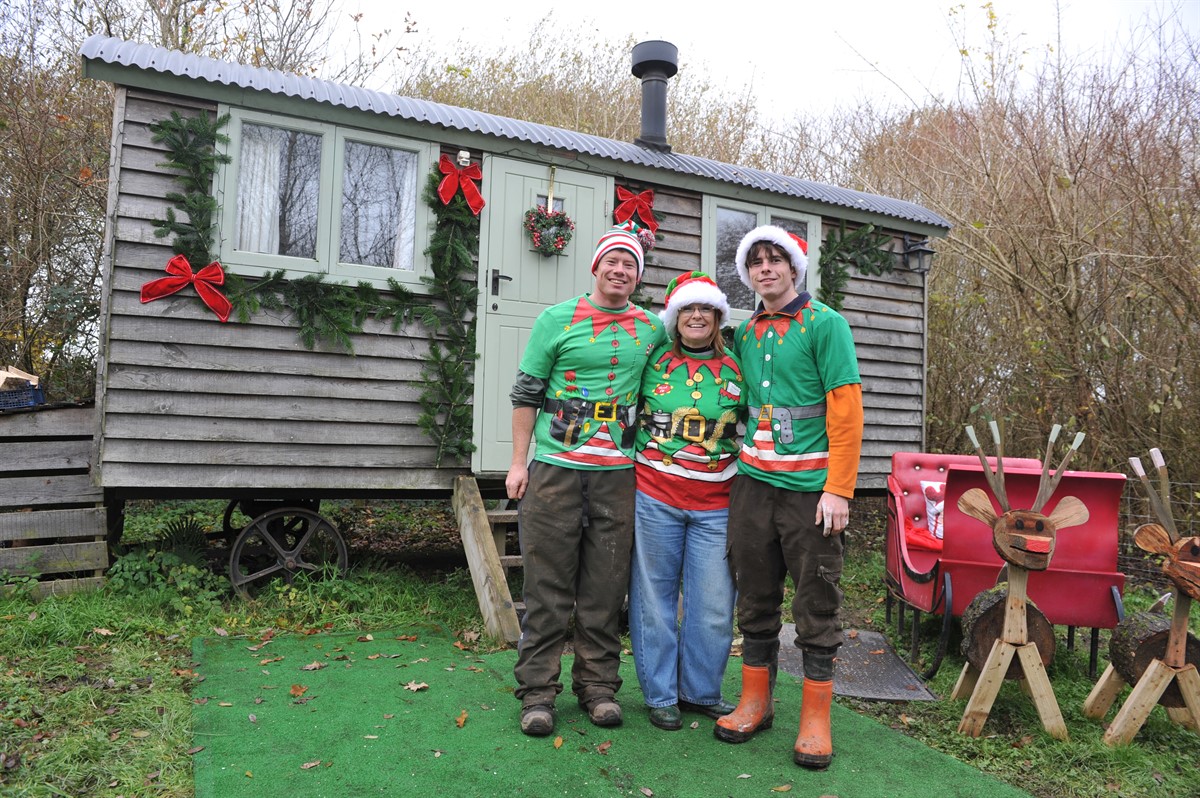
The Reynoldses decamp to South Wales and Keele for the selling period and, as soon as sales are done, the sites close. At Ty Cerrig, cabins that double as a grotto, café or gift shop at Christmas, are rented out through Airbnb.
The rest of the year
For Charles and William, their toilet hire businesses - Space Mobiles, K&S Toilets and Ace Loos - keep them busy thereafter.
When they were researching businesses to buy, they narrowed it down to companies that married up with the cycle of the tree enterprise.
“We didn’t want to prune trees all summer so we looked for something that we could buy that was summer-based,’’ says Charles.
After contemplating a caravan sales business and a cleaning company, they settled on loos as it was a good match for their skills.
“Selling Christmas trees is just a matter of logistics really, making sure trees are delivered on time, and loos are no different,” says Charles.
"The software we have had developed can be used across both because the systems are pretty much the same."
With the 2025 selling period now at an end, the family will be gathering at Knighton for Christmas.
Here, there will be not one, not two, but a staggering seven home-grown trees vying for space In the farmhouse.
"Mum really likes to go overboard at Christmas, says Charles. And, after such an intensely busy few weeks, why not.