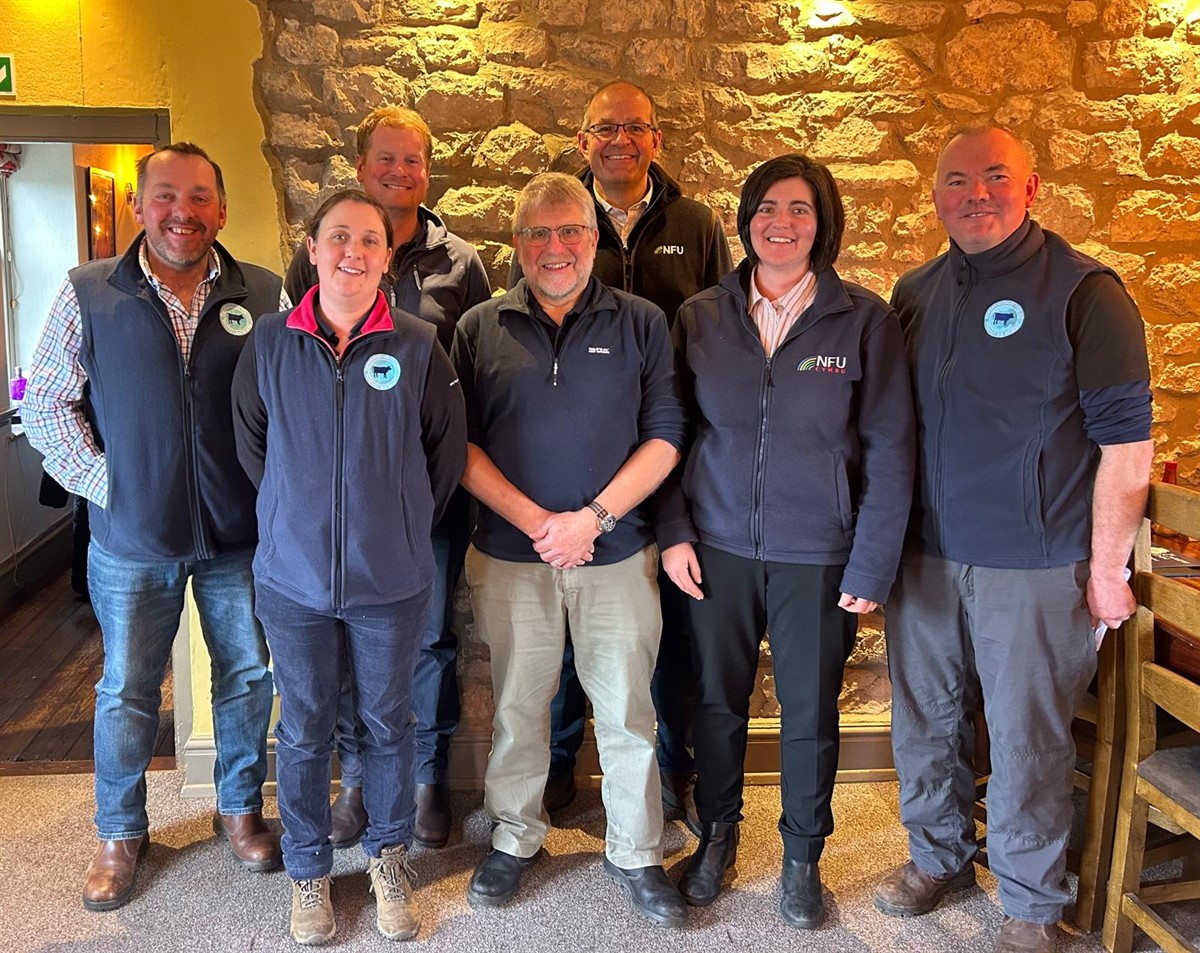
The Project, which brings together fifteen farmers from across Pembrokeshire with their private vets, is funded by Welsh Government and delivered by Iechyd Da and the Sêr Cymru Centre of Excellence for bovine TB (CBTB) at Aberystwyth University, hence integrating research and development with practical veterinary work.
Data to make decisions
The project approach is a combination of data analysis and social science, including training for vets and farmers to improve knowledge of bTB, exploring the use of new biosecurity tools, testing and culling interventions based on data including skin test results and farmer surveys.
However, at its heart is the collaboration between a proactive farmer and their private vet working together in partnership to tackle bTB at a local level.
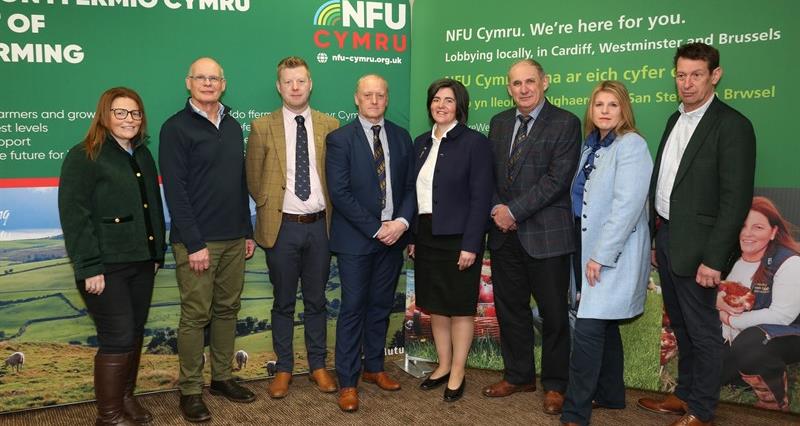
The day started with presentations from Roger, who is also a director and participant in the project, and Brendan Griffin MRCVS from Fenton Vets who is the projects lead vet.
The duo explained how the project is aimed at giving back control of the disease to the people it impacts, farmers and vets, by looking at TB in the same way as we approach other infectious diseases such as Johnes, using data to make informed decisions and interventions.
Farm Tour
This was followed by a farm tour and Roger was able to show delegates first hand the approaches he has adopted on farm as a result of being involved with the project.
By analysing existing and historical bTB skin test results to identify high risk animals, Roger has been able to adapt his breeding strategy ensuring only the lowest risk animals are used to breed replacements with higher risk animals put to beef sires. He has also changed the way he manages youngstock, upgrading calving facilities and investing in pasteurisation equipment, ensuring that every calf gets the best start and the risk of vertical transmission of TB between dam and calf is minimised.
At the other end of the life cycle, Roger is working with Brendan as his vet, to use this data alongside other herd health metrics such a lameness to inform culling decisions, with the aim of managing high risk animals out of the herd in a sustainable and responsible way.
The group also heard how the project is tackling biosecurity, with participants using the HERDSAFE mobile phone app which has been delivered by the Veterinary Delivery Partner Iechyd Da to allow farmers and vets to take a more proactive approach to biosecurity, considering the disease risk posed by both wildlife and other cattle.
How can policy evolve
The discussion over the course of the visit was centred around how TB policy in both England and Wales can evolve to consider the local disease picture. In some TB breakdowns wildlife is the root cause but in others, residual disease within herds or cattle to cattle transmission because of movements can be a greater problem.
Due to the differing drivers of disease across the two countries, members agreed that it is vital that the right tool or combinations of tools - from wildlife control to cattle testing to biosecurity - are deployed in the right place, informed by the disease picture in the local area and on each individual farm.
The group discussed how the role of the private vet in managing a breakdown could be enhanced, noting that whilst the fifteen farms in the project were all different, the common thread was the farmer working with their vet to make management decisions together.
However, for this approach to be rolled out further, the group agreed that future TB policy needs to recognise the benefits of this approach and governments both sides of the border should look at where greater flexibility and local ownership can be introduced without risking disease control.
Continued support
NFU Cymru will continue to support our members and highlight the devastating impact that this disease has on farmers and their families across Wales.
The NFU Cymru Senedd election manifesto clearly sets out our call for a comprehensive eradiation strategy that deals with TB wherever it is found and ahead of the election in May, we will be engaging with candidates from across the political spectrum on their plans for TB policy as part of a future Welsh Government.
More from NFU Cymru: