The annual nationwide survey, organised by the GWCT (Game and Wildlife Conservation Trust) and sponsored by the NFU, provides a vital snapshot of the health of our cherished farmland birds.
The GWCT Big Farmland Bird Count, first held in 2014, is the first nationwide citizen science project to involve farmers in monitoring the state of farmland songbirds.
The count aims to raise awareness of the important role they play in the conservation of farmland birds, and to measure the impact of the conservation work that many farmers and wildlife managers carry out.
New digital platform to make reporting easier
This year, the GWCT has launched a new digital platform to make the process of recording your results easier.
Data will be recorded on a new app. You can input results instantly while you're out in the field or from the comfort of your home. The app can be downloaded on any mobile phone or tablet.
You still have the option to fill in a paper version of the count sheet and sending this to the GWCT, or inputting it yourself, later.
How to get involved
Visit GWCT Big Farmland Bird Count and follow these three simple steps:
- Download the GWCT's new app or print off a count sheet.
- Count your birds on one day between 6-22 February and spend around 30 minutes recording the species and number of birds you can see on one particular area of your farm.
- Once you've completed your count, simply submit your results through the app or online at: bfbc.org.uk by 17 March.
You can also download a free farmland bird ID guide from the GWCT – the essential companion for participants in the Big Farmland Bird Count.
“The Big Farmland Bird Count always provides a fantastic snapshot of the huge amount of work being carried out on our farms to encourage wildlife."
Aled Jones, NFU Cymru President
Take part and make a difference
NFU Cymru President Aled Jones described farmers and growers as “passionate about maintaining and improving the great Welsh countryside”.
“Welsh farmers and growers are the guardians of our iconic landscapes and whether it’s protecting pre-existing habitats or planting hedgerows, their passion for the great Welsh countryside shines through in all the work they do."
He added: “The Big Farmland Bird Count always provides a fantastic snapshot of the huge amount of work being carried out on farms across the UK to encourage wildlife.
“I would encourage members to get help from your children, grandchildren or younger friends and family as it’s a great way to connect with farming in a way that’s engaging, memorable and fun.”
Tips to help make a change
The GWCT suggests a few changes can make a big difference:
- Adopt effective conservation measures, such as providing supplementary winter feeding or growing crops specifically to provide seed for birds.
- Provide extra winter seed food. Supplementary feeding is particularly beneficial for birds of conservation concern like grey partridge, yellowhammer and corn bunting.
- Use ‘conservation headlands’ – wide field margins where little or no pesticides are used – to encourage insect populations and safe nesting habitat.
2025 results
During 2025 nearly 359,000 birds were spotted across the UK during 1,332 surveys:
- Starling, woodpigeon and pink-footed goose were the most abundant species recorded.
- 26 species on the Red List were spotted totalling 139,102 individual birds.
- 44% of farms provide supplementary feed to help birds through winter.
- 65% of participants are in an agri-environment scheme.
While there were decreases in the sightings of some species such as long-tailed tits and curlews, recordings of red-listed common gulls were up 112% and sightings of amber-listed kestrals increased by 182%.
Farmland birds
A few of the common - and less common - species you might spot
Skylark
(Alauda arvensis)
Creative Nature
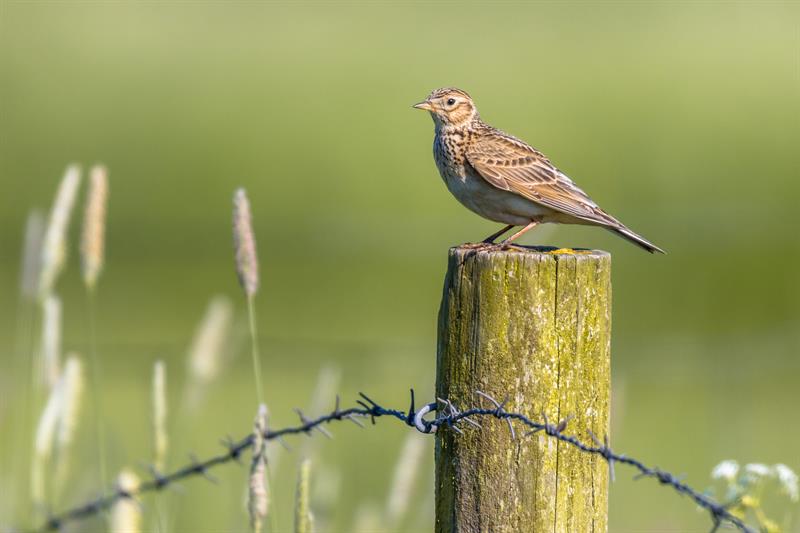
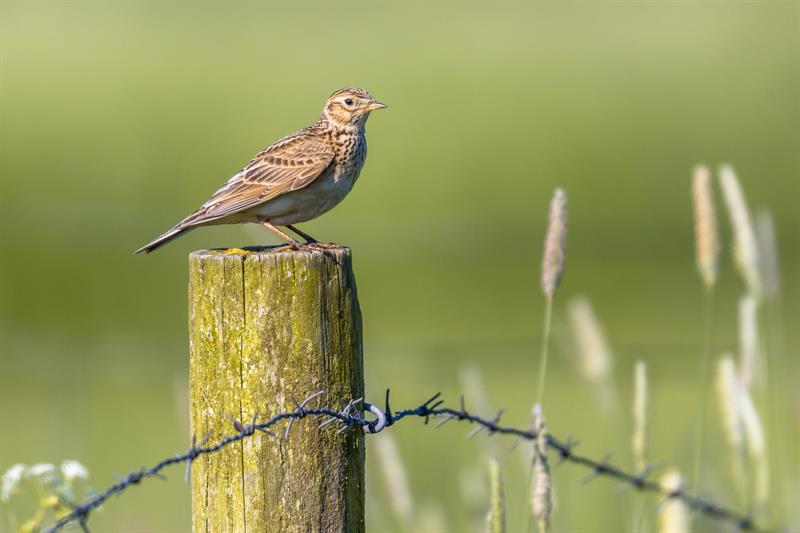
Known for its spectacular display flights high in the air, the skylark is believed to have suffered a 50% drop in numbers in the 1990s due to habitat loss, although they are widespread across the country.
Skylarks are small brown birds with pink legs, larger than a sparrow but smaller than a starling, found on open farmland and heath at any time of year.
They nest on the ground, making them vulnerable to predators, farm machinery and dogs. Their preferred food is seeds and insects.
Linnet
(Carduelis cannabina)
aaprophoto
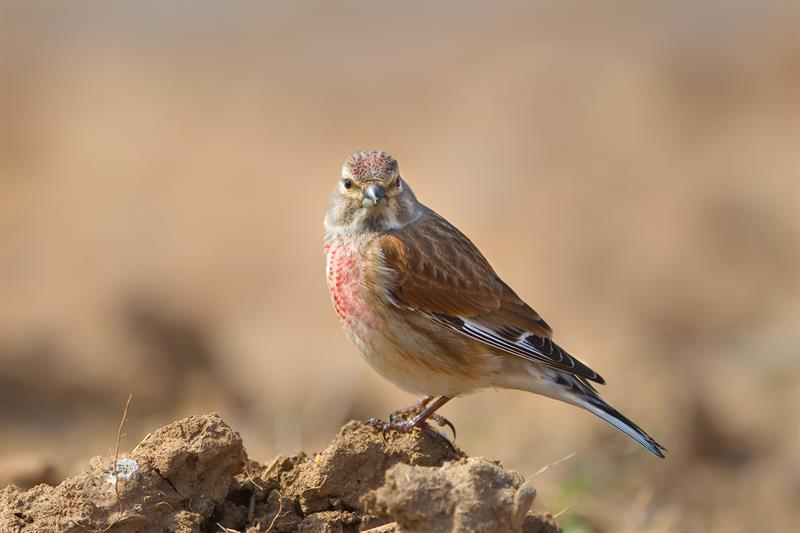
The linnet is a small, slim finch, found across the UK, except NW Scotland. Numbers declined by 57% between 1970 and 2014. Seen on commons, heathland, rough ground, hedgerows and salt marshes, they have an undulating flight, twittering as they fly, and gather in flocks in winter.
Males are recognisable by their crimson forehead and breast, while the females are browner.
They are mainly seed eaters but will also sometimes eat flowers and small invertebrates.
Fieldfare
(Turdus pilaris)
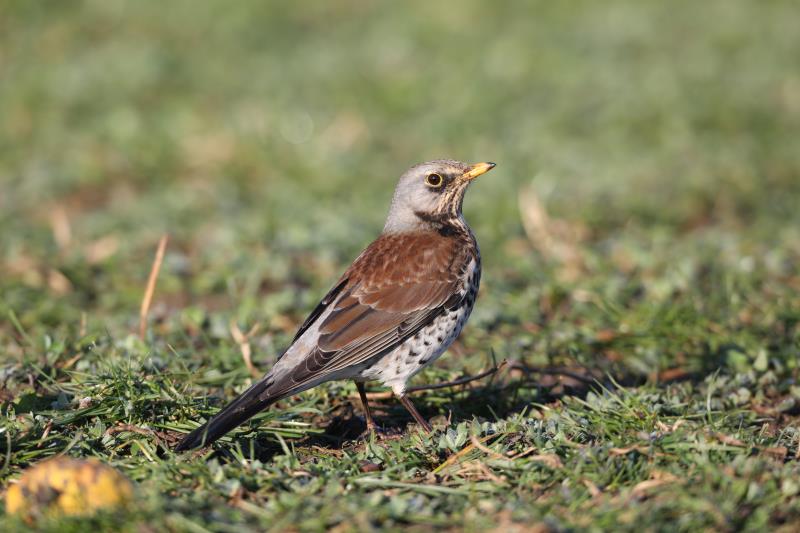
The fieldfare is a welcome winter visitor from its northern breeding grounds. Berryladen hedges are a favourite feeding spot and in late winter, grassland and arable fields attract this sociable bird.
Their varied diet includes snails and slugs, earthworms, spiders and insects, plus grains and seeds.
Fieldfares are large thrushes which move with an upright hop and can be seen between October and April. Recognise them by their brown back, yellow breast black tail and grey head.
Dunnock
(Prunella modularis)
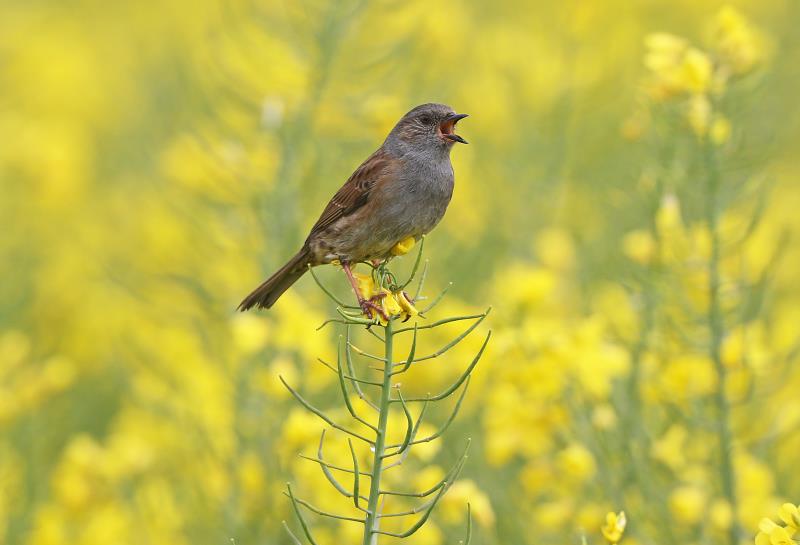
A small brown and grey bird with a rather nervous, shuffling gait, the dunnock is shy and unobtrusive and may be seen on its own creeping along under hedges.
It can be spotted all year across the UK, except the Scottish Highlands.
Despite their shyness, dunnocks are territorial birds: when two males meet, they will become highly animated, with loud calling and wing flicking.
Dunnocks feed on insects, spiders, worms and seeds and make their nests in hedges or shrubs.