The annual two-week survey, organised by the GWCT (Game and Wildlife Conservation Trust) and sponsored by the NFU, ran from 6 February and was extended to 1 March to account for a spate of exceptionally wet weather.
Results of the GWCT Big Farmland Bird Count paint a picture of the current state of the nation’s farmland birds and help identify any species that are struggling.
More than 1,200 farmers reached for binoculars to take part in the citizen science project this year, surveying 292,828 hectares of land and spotting 275,024 birds.
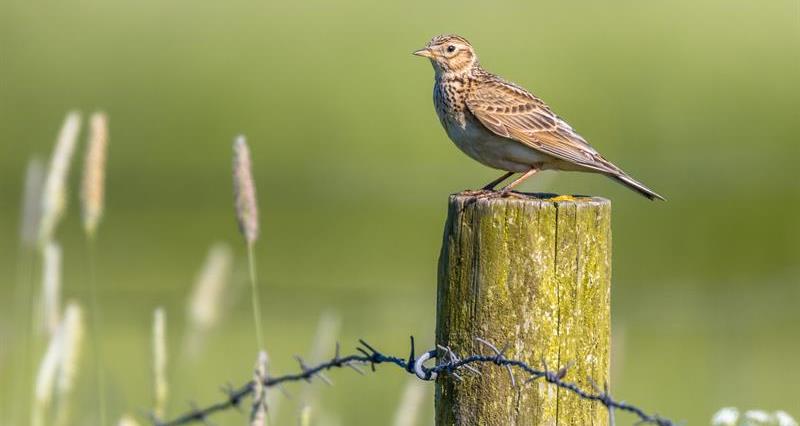
That tally included 34 on the ‘red list’ – eight more than last year – with more than 69,000 starlings, lapwings, fieldfare and linnets spotted.
“This is why it is so important that the government provides some much-needed certainty on SFI and the future of agri-environment schemes.”
NFU Vice-president Robyn Munt
NFU Vice-president Robyn Munt said: “It is really encouraging to see farmers and growers continually engaging with the Big Farmland Bird Count, with a range of farmland bird species being recorded in large numbers on farms during the winter.”
“This makes conversations with other scientists, working conservationists on the ground, and policymakers easier, as we have strong data to back up our points.”
GWCT Director of Advisory Dr Roger Draycott
Data ‘important indicator’
Twelve years into the project, farms have been able to chart the biodiversity gains of long-term conservation efforts and demonstrate the ongoing need for agri-environment schemes.
The results revealed that about two-thirds of the farmers who took part were in schemes, with a similar proportion offering supplementary feeding.
Analysts believe this means that the under-threat species that are declining nationally were still being found on winter farmland in encouraging numbers, providing an ‘important winter refuge’, evidencing the value of farmers’ agri-environment efforts.
NFU Vice-president Robyn Munt said: “These findings provide a valuable data set and are an important indicator that farmers and growers can sustainably produce food while supporting outcomes for nature.
“From providing supplementary feeding to maintaining hedgerows, land managers across England and Wales are playing a vital role in supporting farmland wildlife.
“With 67% of farms surveyed participating in agri-environment schemes, it is clear that schemes such as the SFI (Sustainable Farming Incentive) are making a difference on the ground. This is why it is so important that the government provides some much-needed certainty on SFI and the future of agri-environment schemes, so farmers can continue to make positive environmental choices with confidence.”
While Defra has now published near-final guidance for SFI26, the NFU continues to urge for budget transparency, as well as clarity for the 28,000 farmers and growers with agreements expiring this year.
Making conversations easier
On the results, GWCT’s Director of Advisory Dr Roger Draycott said: “Findings like this help to demonstrate the impact of practitioner science schemes like the Big Farmland Bird Count and gives us valuable information about how birds are faring across our farmland, and what actions farmers and other land managers can take to help.
“This makes conversations with other scientists, working conservationists on the ground, and policymakers easier, as we have strong data to back up our points.”
2026 saw GWCT work with PerdixPro to provide participants with a new digital platform to make recording results even easier.
The trust are also currently working on a long-term analysis of the data that has been collected to date, Roger said, and they “look forward to sharing the results of that in due course”.