Aligning with the EU – NFU calls for clear communication and transition period

23 April 2026

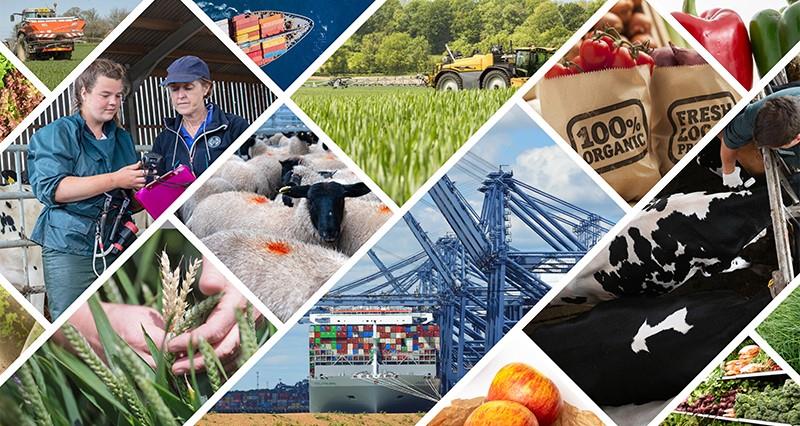
Farming montage

Photograph: garynaylorphotography / 'Fototek' Geoff and Tordis Pagotto / Rawf8 / Alamy Stock Photo / umdash9 / Primary Picture

The NFU has responded to the government's Call for Information on a Sanitary and Phytosanitary agreement with the EU, calling for transitional arrangements as well as clarity from the government now, with just over a year to go until the agreement is expected to come into force. 

The UK Government is negotiating a food and drink agreement with the EU, which will see Great Britain align with many EU standards, with far-reaching implications for which plant protection products you use, to checks at the border and organic standards. 

The government has said it is working towards a mid-2027 start date for the new agreement, and is urging agri-food businesses to start preparing now. Preparing will be difficult as it’s not clear what exactly you need to prepare for. 

For more information, you can read our explainer breaking down what an SPS agreement is and what dynamic alignment means for you. You can also check out our timeline to stay up to date with the NFU’s lobbying work in this area.

You can keep track of the government’s Call for Information, which the NFU responded to, raising its members’ concerns, on this page. 

23 April 2026

NFU responds to Call for Information

Having sought feedback from our members, we have continued our calls for better communication from the government and for transitional arrangements to be in place.

Clarity needed now

What is clear is that farmers and growers want clarity and information from government now.

Many feel that, bearing in mind the government's plans for the agreement to start in June 2027, any communications on what businesses will need to do will come too late in order to be able to manage change without having a potentially damaging impact on businesses.

Transitional arrangements

The NFU believes the UK Government should negotiate a variable pace transitional arrangement with different start dates for dynamic alignment depending on the degree of divergence and time needed to prepare. In practice, this will mean differentiating between areas where trade barriers can be quickly removed and those where greater time will be required to adjust. 

For example, farmers and growers need urgent clarity on timings of any PPP (plant protection product) withdrawals, use-up periods, and dates when replacement actives are due to be authorised and available.

This information needs to be communicated via trade and grower associations and PPP distributors as early as possible. 

Failure to secure targeted transitional arrangements for plant protection products and the associated MRLs would have significant negative consequences for farmer and grower businesses.

Supply chain

Farmers and growers remain uncertain about how SPS alignment will affect their supply chain operations. 

The area identified as most likely to be affected was the sourcing of raw materials and inputs, followed by transport and logistics, and contract changes. 

Exceptions to alignment

It is also important that the government secures exceptions to dynamic alignment to safeguard key areas of progress and innovation. For example, enabling continued access to precision breeding technologies in England which are not currently permitted under EU GMO (genetically modified organisms) regulations.

Additionally, there are areas of legislation which the NFU believes should be out of scope of this agreement, and therefore not subject to dynamic alignment with EU regulations. This includes AMR (antimicrobial resistance) provisions in the EU veterinary medicines regulations to ensure that animal health and welfare is protected while mitigating against the risk of antimicrobial resistance.
12 April 2026

NFU survey closes

The NFU's survey has now closed. You can respond directly to the government's Call for Information until 23 April at: GOV.UK | UK-EU SPS Agreement.

11 March 2026

NFU launches member feedback survey

The NFU has launched a survey to help inform its response to the Call for Information. No matter your level of knowledge on this issue, it's important you take our survey so we can represent your needs to government.

Negotiations are underway and probably wont conclude until later this year and the government will have to pass legislation. Nevertheless, spending some time thinking about what alignment could mean will help us to get the best deal for you. 

The EU rules that Great Britain will be aligning with will apply to all domestic production meaning that, even if exporting is not part of your business, you may also need to adapt your business once the agreement comes into force.

Key changes

Some of the main changes we anticipate include:  

  • Removal of routine border checks for imports and exports of food and agricultural products between GB and the EU. 
  • Alignment with the EU animal health frameworks. This will require regular animal health visits by a vet for all animal keepers as well as changes to the way that exotic diseases are managed. Read our explainer (opens in a new tab).
  • Alignment with EU rules for plant protection products. This will require compliance with EU residue limits in food and adherence to EU rules governing the marketing and use of PPPs. We anticipate this will result in changes to GB MRLs as well as the Active Substances available to growers in GB and their conditions of use. Read our explainer (opens in a new tab).
  • Alignment with EU biocidal product regulation. This will require adherence to EU rules governing the use of biocidal products. Agricultural uses of Creosote (posts, poles, and fencing) are no longer permitted in the EU.
  • Alignment with EU organic regulations. This will require organic producers to comply with new EU organic rules which came into effect in 2022. We anticipate this could pose significant challenges for organic poultry producers. Read our explainer (opens in new tab).

9 March 2026

Government launches Call for Information

The government has set out which areas of food, feed and farm practices it expects Great Britain to align with EU regulation on as part of its future SPS (Sanitary and Phytosanitary) agreement.

The document outlines a list of regulations that it expects to be in scope of the agreement with the EU. 

These include legislation and regulation affecting plant health, animal health, plant protection products and organic standards. 

You can read more about how each of these areas could be affected on our dedicated webpages:

The government is working towards a deadline of mid-2027 for the agreement to come into force. 

View the Call for Information at: GOV.UK | UK-EU SPS Agreement.

What does this mean for my business? 

Since the UK withdrew from the European Union, routine border checks have been applied to a range of agri-food products moving between the UK and EU, creating friction at the border and increased costs and risks for exporters. Those depending on importing planting material in particular have faced increased bureaucracy, costs and unacceptable delays. 

The government has confirmed that it expects costs such as those for Export Health Certificates (£200 per consignment), Phytosanitary Certificates (£25), Organic Certificates of Inspection (£35), as well as sampling costs, and inspection and identity check fees to be removed as a result of the agreement. 

However, there are significant challenges. From a potential cliff-edge scenario where GB follows EU rules and decisions on PPPs (plant protection products) from mid-2027, to possibly losing the ability to vaccinate cattle against bTB, the impact of aligning will be far reaching.

It is therefore crucial that you feed into our survey so we can make sure we are raising your concerns with government.

This page was first published on 11 March 2026. It was updated on 23 April 2026.


Ask us a question about this page

Once you have submitted your query someone from NFU Cymru will contact you. If needed, your query will then be passed to the appropriate NFU policy team.

You have 0 characters remaining.

By completing the form with your details on this page, you are agreeing to have this information sent to the NFU for the purposes of contacting you regarding your enquiry. Please take time to read the NFU’s Privacy Notice if you require further information.