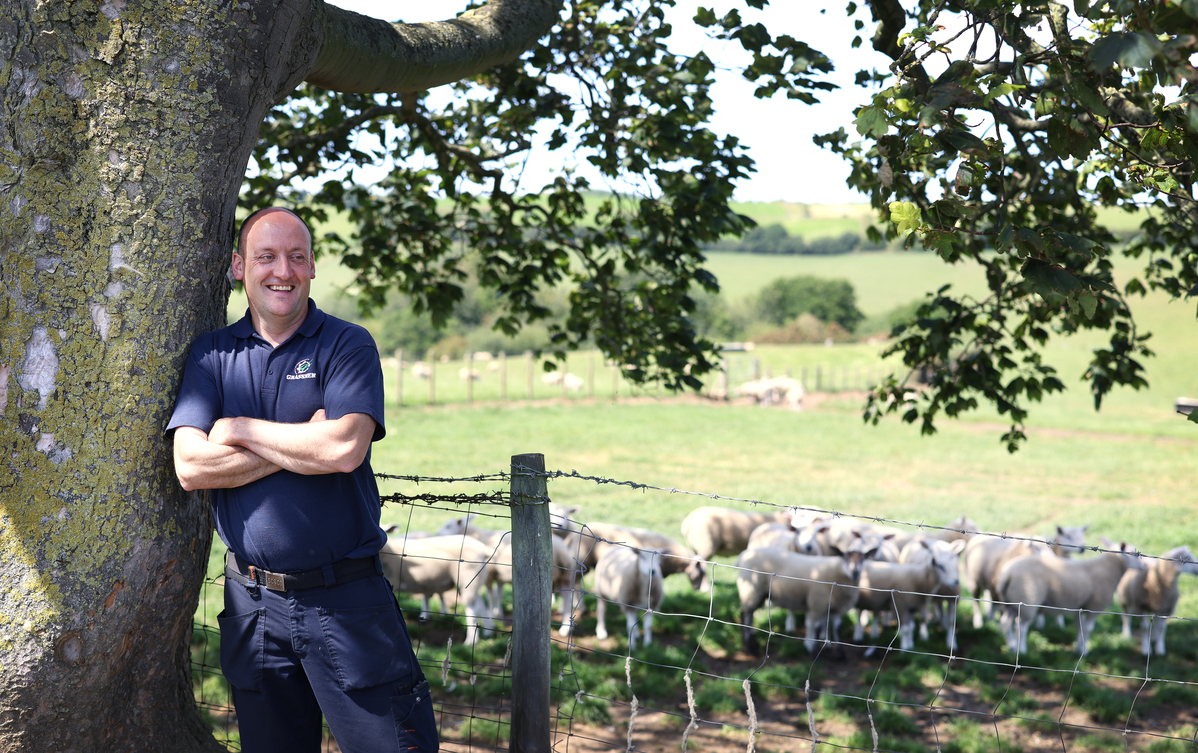
Unexpectedly losing a large block of rented land would be a major blow for most Welsh beef and sheep farms but the Roberts family turned this knock to their advantage by taking steps to increase output from the remaining acreage and reducing input use, ultimately improving profitability. For four generations the Roberts family has farmed Ty Draw, a Golden Grove estate farm at Llanasa, near Holywell, and rent other land too.
In 2009 they lost a big chunk of their rented acreage, land which also came with a large shed used for housing ewes at lambing.
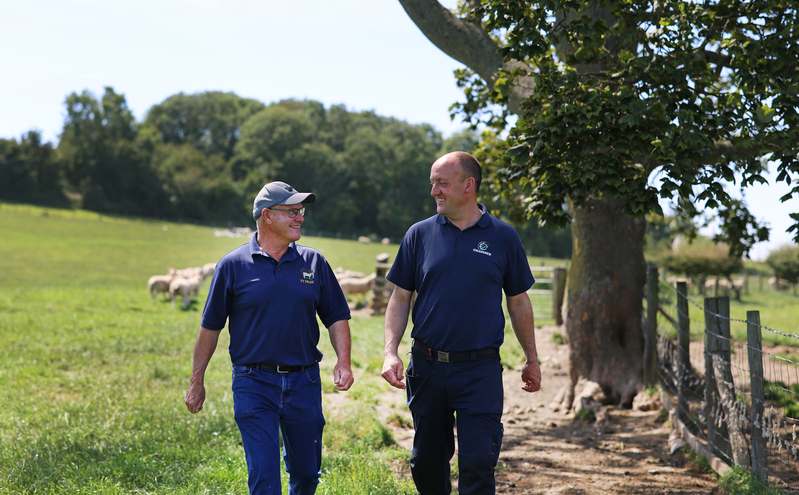
"It was a big setback for the business, we lost it literally overnight," recalls Mathew, who farms with his father, David.
'Things happen for a reason'
"But I’m a great believer in things happening for a reason and in this case it forced us to use what land we had better."
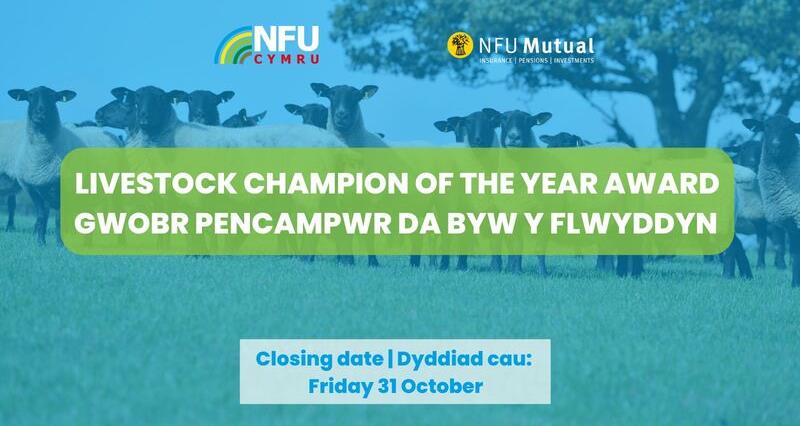
The result was more frequent soil testing, liming and reseeding programmes and monitoring fertiliser use. A new dual purpose shed for sheep and cattle was built.
Expansion
At around 600 acres the land farmed is now more or less where it was in 2009 because the family has since been offered and taken on other blocks.
But the legacy of cost control and sustainability measures endures.
Red clover and fodder beet is now grown which allows the entire winter fattening ration for beef cattle to be home-produced.
Concentrate use for pregnant ewes has been reduced, lambs are sold earlier because they are creep fed and fertiliser applications have been slashed thanks to reseeding and lime applications – in the spring 40kg/acre is applied, down from 100kg, and in the autumn 40kg/acre, compared to 75kg.
Beef and sheep enterprise
The farming system is based around beef and sheep, one that earned the Roberts family the NFU Cymru/NFU Mutual Welsh Livestock Champion of the Year Award 2024.
Beef is supplied to Morrisons through the company’s Elite Beef programme, an integrated scheme with the Robertses’ owning the cattle but contracted to the Myton Food Group who supply Morrisons.
Once all stoppages, including calf cost, are deducted from the carcass value, the remainder is paid to the farming business.
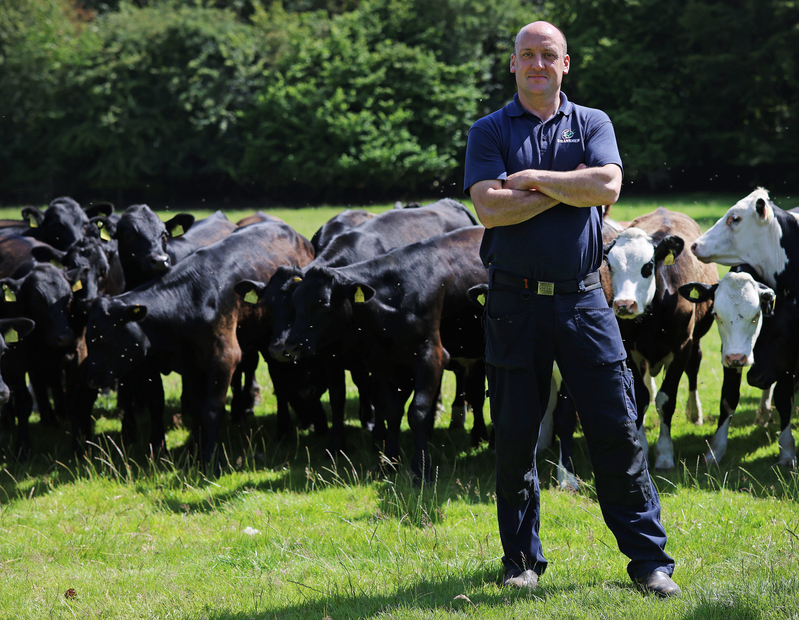
Aberdeen Angus-cross and Hereford-cross cattle arrive at Ty Draw at three-four months old at an average weight of 140kg. The scheme dictates that these must be finished by 20-months-old.
David and Mathew initially fattened British Blue-crosses but this changed after a year when they trialled a few native breed cattle and these finished up to three months earlier and with less feed.
Finishing cattle
Aberdeen Angus-crosses finish at 17 to 18-months-old – steers at 350kg deadweight and heifers at 280kg.
Three hundred cattle are fattened annually, grazed through the summer and housed from September to finish by the end of the year.
Targets need to be met because the shed doubles as lambing accommodation, therefore the cattle must be off the farm before the ewes are housed.
Before the family joined the Elite Scheme, their policy was to buy Continental breeds as forward stores, sourced from livestock marts in September and October to finish in January, but making a profit was a struggle.
"For two successive years, at a time when the beef price was very low, we lost money," says Mathew. "The Morrisons scheme offers us more security."
Lamb
Lamb is produced from a flock of 1,450 Texel-cross ewes, tupped with Texels and Beltex-cross rams.
Suffolk yearling ewes were introduced for the first time last year after a bout of mastitis in the Texel-crosses.
"Suffolks are known to be less prone to mastitis and that seems to be the case, we have only had a very small percentage of cases this year so the plan is to increase Suffolk numbers," says Mathew.
The majority of the 2,400 lambs produced annually are supplied to Pilgrim’s UK at Llanidloes at an average liveweight of 44kg and a small number are sold at St Asaph Market. Lambs produce a 21kg carcass at an E or U grade.
The first lambs are marketed at 8-10-weeks-old and the aim is to have them all sold by the end of August.
Creep feeding was introduced to speed up finishing times. "It means we can wean ewes early, to give them a good rest before they go to the tup, and fertility has improved because of that," says Mathew.
"It also means fields can be cut for silage and we produce a better crop for the winter."
It makes space for additional income too as up to 1,500 store lambs are purchased in September to fatten on red clover.
EID is used for both cattle and sheep, with growth rates monitored and diets adjusted as needed.
All feed apart from ewe concentrates and lamb creep meal is produced on-farm.
Red clover leys
Red clover plays a significant role, both grazed and conserved as a high protein silage.
Three different red clover mixtures are grown – a five-six year cut and graze mix incorporating 1.5kg/acre (3.7kg/ha) of persistent red clover, a six-year long term mix with white clover and 0.7kg/acre (1.7 kg/ha) of red clover for harvesting and grazing and a dedicated two to three year cutting ley incorporating 3kg/acre (7.4kg/ha) of red clover with hybrid and perennial ryegrass.
First cut typically analyses at 12 ME MJ/kg DM and 15-20% crude protein.
Fodder beet also forms an important part of the ration – acreage has trebled to 18 acres in recent years, the majority lifted and fed to the cattle but another variety is both grazed by the sheep and also harvested to feed to ewes at lambing.
Fodder beet
"Fodder beet has made a massive difference to reducing our feed costs," says Mathew.
The third element of the cattle ration is barley, grown on the farm and rolled.
To get the best from the land, there is a regular programme of soil testing - when the pH is less than six, lime is applied.
Agri-schemes
These actions will help the business tick many of the boxes needed to qualify for the universal tier of the Sustainable Farming Scheme (SFS) but there are other factors that could preclude it from joining, Mathew suggests.
"We probably will sign up for the SFS but we need to see how it will work for us, we have blocks of land with good tree cover but we might fall short on habitat."
On efficiency and production, the farm is in much better shape that it was a decade ago and that stands it in good stead for the future.
"We recognised that we can’t rely on subsidies going forward, we have to be at the top of our game, that’s how we will be through this period," says Mathew.
His wife, Sian, and their children, Harri (17), Celyn (13) and Iwan (10), are very much part of day-to-day activities on the farm and having their involvement and support makes farming all the more enjoyable, he adds.
Good future for farming
He sees a good future for farming, not only for those involved in the industry now but for future generations too.
"There is a lot of negativity about farming, especially if you believe what you read on social media, but if farmers have a good product to sell, are good at what they do and are efficient, it is a good time to be farming.
"What we produce is selling well, there is more demand than ever for exports of Welsh lamb. I think farming has a good future."
From his own experiences, never being afraid to change is another policy that stands farmers in good stead.
"We mustn’t get stuck on doing things a certain way because that’s the way they have always been done, that outlook doesn’t pay, it doesn’t let a business grow and thrive."