NFU Cymru supports Welsh Affairs Committee’s call for delay to inheritance tax changes

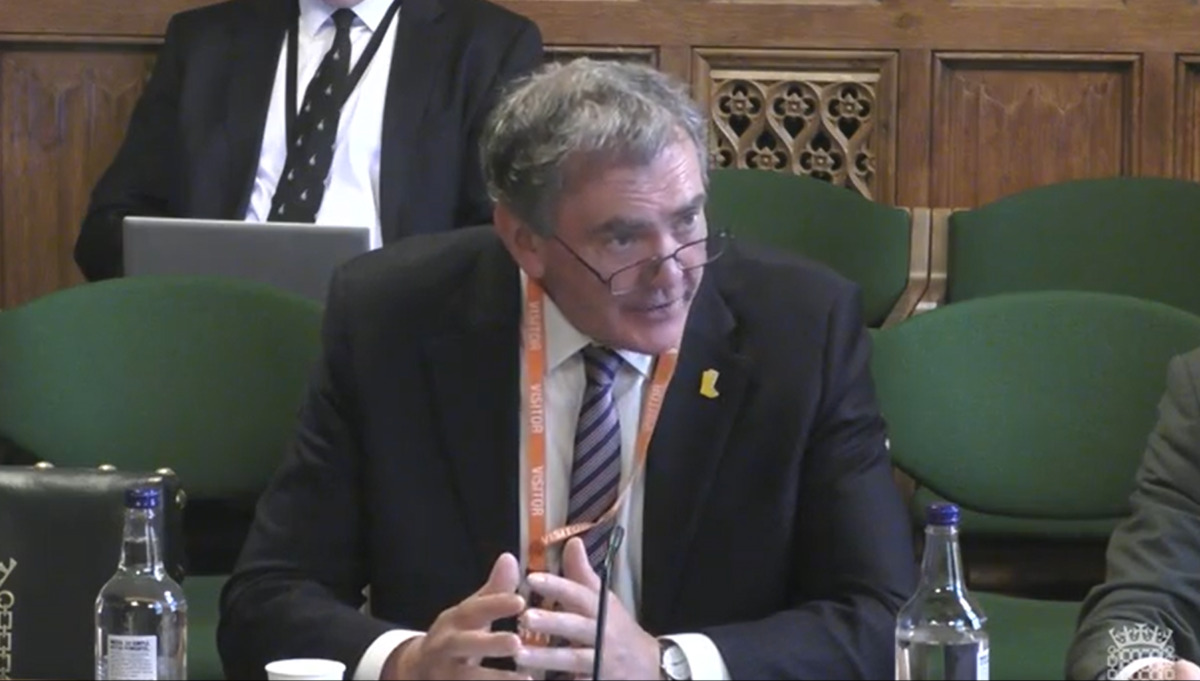
Aled Jones giving evidence to the Welsh Affairs Committee in the Senedd

A cross-party House of Commons’ select committee report calling for a delay to the UK Government’s reforms to inheritance tax has been welcomed by NFU Cymru.

The House of Commons’ Welsh Affairs Committee has published a report (Wednesday 12 November) following its inquiry into Farming in Wales in 2025: Challenges and Opportunities. NFU Cymru had submitted both oral and written evidence to the inquiry. Among the report’s conclusions is a recommendation that the UK Government must delay implementing its final reforms to Agricultural Property Relief (APR) and (Business Property Relief) until an impact assessment has been published and scrutinised by the committee.

NFU Cymru President, Mr Aled Jones said: “I am heartened that so much of the detail presented by NFU Cymru in its evidence to the inquiry, highlighting the significant concerns of members across Wales, has been reflected in the committee’s report, its conclusions and recommendations. 

Area of concern

“Over the last 12-months, some of the most difficult and heart-rending accounts which have been shared with me involve elderly farmers or those with terminal illness. Many of these farmers have arranged their affairs on the basis that their estates would not be subject to inheritance tax but now they stand to be disproportionately affected by this policy, as they simply do not have the time left to make alternative succession arrangements. I am pleased that the committee has also identified this as an area of concern.

“The committee’s report challenges the Treasury’s assessment of the number of farms likely to be affected by the inheritance tax policy changes on the basis that these general indications of farm values are produced in the absence of key information concerning individual business, which could lead to a ‘misleading’ picture. This lack of precision in the Treasury data is further compounded by the lack of Wales level data. I remain firmly of the view that far more farms will fall into the scope of this new tax than the Treasury claims.

Calls to delay to APR and BPR

“NFU Cymru firmly supports the committee’s recommendation to UK Government calling for a delay to the APR and BPR reforms until a Wales specific impact assessment has been published and scrutinised by the committee. We also concur with the recommendation for a revisiting of all the available data relating to farm ownership in Wales to develop a more detailed understanding of the potential impact that changes to inheritance tax may have on farmers in Wales. I urge the UK Government to heed this advice rather than hurtling headlong into a policy which we know gives rise to a range of negative and unintended consequences.”

“The committee’s report challenges the Treasury’s assessment of the number of farms likely to be affected by the inheritance tax policy changes on the basis that these general indications of farm values are produced in the absence of key information concerning individual business, which could lead to a ‘misleading’ picture. This lack of precision in the Treasury data is further compounded by the lack of Wales level data. I remain firmly of the view that far more farms will fall into the scope of this new tax than the Treasury claims."
Aled Jones, NFU Cymru President

The release of the Welsh Affairs Committee’s report arrives just two weeks ahead of the UK Government’s autumn budget announcement on Wednesday 26 November. Many of the conclusions and recommendations contained within the report – including the request for a pause in the rollout of the inheritance tax changes - echo those of another House of Commons Cross-party committee, the Environment, Food and Rural Affairs (EFRA) Committee.

Powerful

Mr Jones said: “I commend the Welsh Affairs Committee for quickly getting to the nub of what is a complex issue. What makes this report particularly powerful is the fact that a committee with a diverse, cross-party membership, has been able to reach a unanimous view with regards to conclusions and recommendations about the truly damaging impact of the UK Government’s inheritance tax policies on Wales’ family farms - and the need for a delay.

“It is clear to me that when MPs, no matter what their political party, sit down and consider in detail the impact on ordinary farmers of the government’s inheritance tax policy proposals, they recognise and understand the inadvertent consequences of the proposed changes. They have reached the view that a pause and review of the policy is needed to better understand its impact on farming families and to look at alternatives.  

“Ahead of the budget later this month - and in light of the Welsh Affairs Committee’s report - NFU Cymru is repeating its call to the Chancellor to recognise the uniqueness of Wales’ farming sector, its multi-generational nature and its importance to Wales’ culture and economy. There must be a pausing and reviewing of this policy to look at its unintended consequences and to consider some of the other proposals which have been put forward.”

The headline conclusions of the report include:

Economy, Community and Culture

  • The Committee recognises that farming is “a physically demanding, low-income sector, largely made up of small, family-run livestock farms” central to the preservation of the Welsh language and rural culture

Inheritance Tax Reforms

  • The Committee are concerned that there is a lack of Wales-specific data used to make the proposed reforms and note “that the change in policy may have a disproportionate impact on elderly farmers or those with terminal illness who have arranged their affairs on the basis that their estates would not be subject to IHT”.
  • The Committee also refer to evidence that the tax changes are exacerbating already high rates of physical and mental ill health.
  • The Committee call on the UK Government to delay implementing the reforms until a Wales-specific Impact Assessment has been published and scrutinised by the Committee, recommending that “all the available data that relates to farm ownership in Wales should be revisited to develop a more detailed understanding of the potential impact the changes to IHT may have on farmers in Wales”.

Funding, Ringfencing and Barnettisation

  • Though the Committee notes that “it is a fundamental principle of devolution that decisions affecting Wales should be made in Wales and that the Welsh Government should have autonomy over its budget” they recognise concerns raised by NFU Cymru and other stakeholders that the removal of ringfencing could lead to a reduction in Welsh agricultural funding.
  • The Committee agree that there is a strong case for Welsh Gov to maintain ringfencing and recommend that HMT and the Wales Office work with Welsh Gov “to ensure that the baselining of agricultural funding into the Welsh Government’s block grant, alongside the application of the Barnett Formula to future allocations, does not lead to a real-terms decline in funding for Welsh agriculture”.
  • The Committee conclude that “it is vital that this does not become a mechanism through which agricultural funding for Wales is gradually reduced, relocated or deprioritised in future spending decisions”.

International Trade

  • On UK-EU reset, the Committee call on the Westminster Government to publish a roadmap on how they plan to establish an SPS zone between the UK and EU by May 2026
  • On Australia and New Zealand FTAs, the Committee conclude that they will “disproportionately disadvantage the agricultural sector in Wales” because the share of beef and sheep meat is a far larger share of the sector in Wales than in England. The Committee are concerned that “as these imports increase yearly, Welsh beef and lamb producers will face greater competition from Australian and New Zealand imports and may struggle to remain competitive” and that “FTAs have been entered into in the full knowledge that Wales’ agricultural industry may be negatively impacted”.
  • On International Trade Agreements, the Committee are concerned about the “perceived disparity in production standards and the levels of financial support received by farmers in countries that the UK Government is negotiating trade agreements with” as well as the risk of lower standard products being allowed to enter the UK market

Domestic Trade

  • The Committee note the concern of stakeholders that the Groceries Code Adjudicator does not have sufficient powers to address the challenges facing the agri sector

Pathways for Next Gen

  • The Committee are concerned that the Westminster Government fails to recognise that Wales is unique due to its larger network of tenant farmers compared to England which are a key mechanism for new entrants, they call on both governments to work together to “develop more targeted support and technical upskilling programmes for young and new entrants into the Welsh farming sector”.

Food Security 

  • The Committee point to a decline in sector employment, trade with European markets and livestock numbers as a cause for concern for sustainable domestic production. They conclude that “we are concerned that a continuation of these trends might be seen as inevitable and policy makers in Cardiff and Westminster should focus on strengthening and growing the industry”.

Complacency

  • The Committee conclude the report by saying that “farming practices and conditions in Wales differ significantly from those in England, and it is essential that these differences are fully understood by policy makers in Westminster”. Though they note it is incumbent on Welsh Gov to make the case for Welsh farming, the Committee argues that “that in this endeavour the Wales Office under successive Governments has not been as successful as it needs to be to build confidence among farmers in Wales”.

Ask us a question about this page

Once you have submitted your query someone from NFU Cymru will contact you. If needed, your query will then be passed to the appropriate NFU policy team.

You have 0 characters remaining.

By completing the form with your details on this page, you are agreeing to have this information sent to the NFU for the purposes of contacting you regarding your enquiry. Please take time to read the NFU’s Privacy Notice if you require further information.