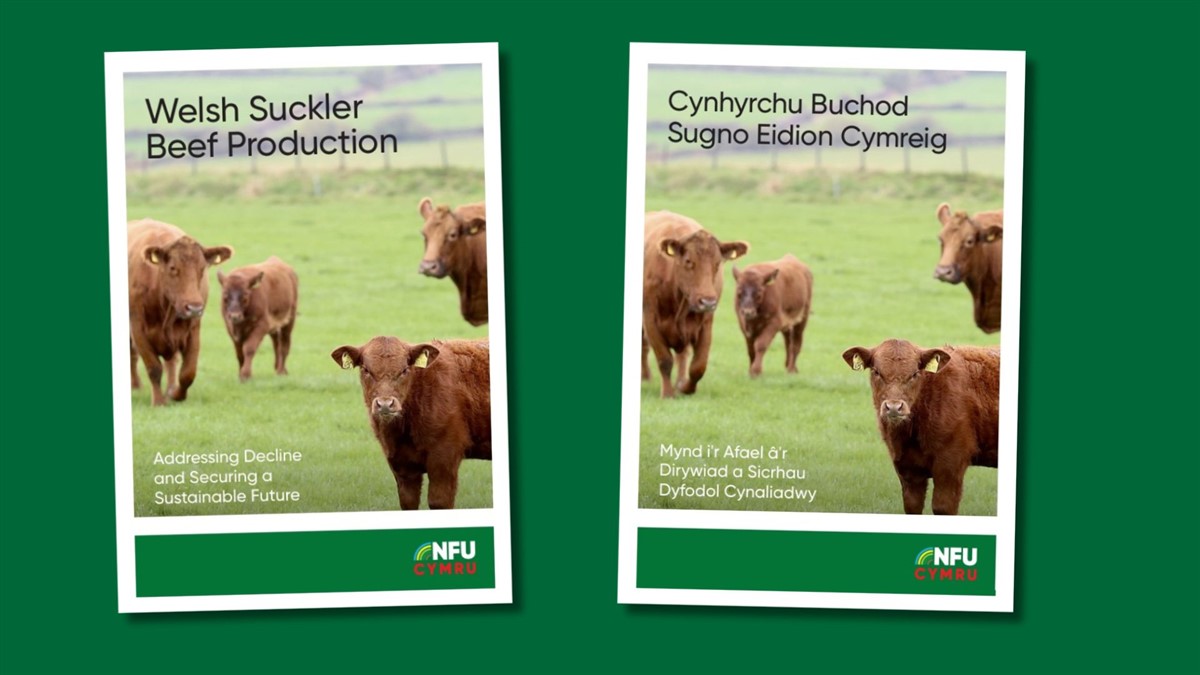
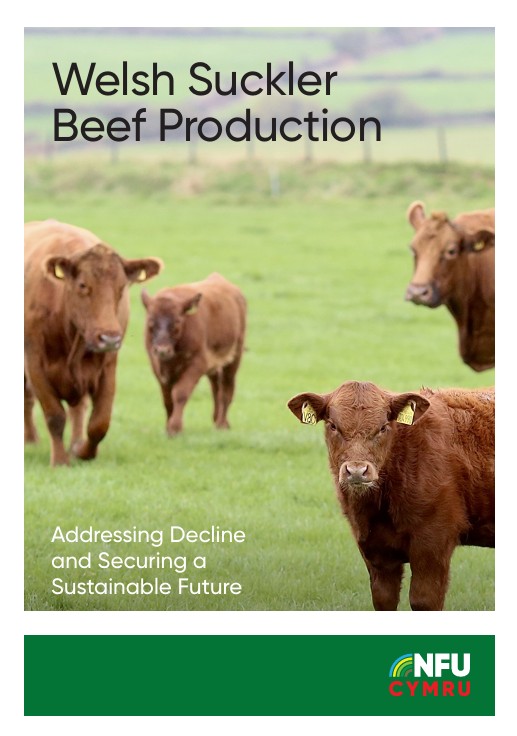
The event, held at Bryn Williams’ restaurant on the Colwyn Bay Promenade on Friday 6 February, saw NFU Cymru launch its new Welsh Suckler Beef Production: Addressing Decline and Securing a Sustainable Future report. Developed by NFU Cymru’s Livestock and Less Favoured Area (LFA) boards, the document examines the outlook for Welsh suckler beef production and makes several recommendations to safeguard the sector’s future, along with the multiple economic, environmental, social and cultural benefits it delivers.
Suckler cow herds – kept for the production of beef - have been an iconic fixture of Welsh farming and Wales’ landscapes for centuries. Often reared in Wales’ Less Favoured Areas - where the range of crops that can be grown can be more limited - these cattle are central to habitat management, delivering biodiversity benefits and reducing wildfire risk, while also turning grass and natural rainfall into high quality, nutrient dense protein.
“Suckler cows are an intrinsic part of Welsh livestock farming and form an important part of our culture and heritage. These herds have been integral to shaping and managing our landscapes over generations and played a vital role for our rural economy, too."
Rob Lewis, NFU Cymru Livestock Board Chairman
Read the report
The numbers
Wales is home to 6,000 suckler cow herds which contribute £390m to the economy, around 18.6% of agricultural output. However, the number of suckler herds has fallen by nearly 40% from 10,816 in 2004 to 6,595 in 2023. Production costs are high and margins are severely challenged without support. Suckler businesses are also faced with the significant risk posed by bovine TB and must operate against a heavily regulated backdrop, which carries sizeable costs and places further disproportionate strain on small family farms. But despite the challenges, demand for Welsh beef remains high and UK beef imports continue to increase.
NFU Cymru’s Welsh Suckler Beef Production: Addressing Decline and Securing a Sustainable Future report makes recommendations to help the industry seize these opportunities. This includes the next Welsh Government introducing a targeted suckler herd support package to halt decline and rebuild critical mass. In line with NFU Cymru’s call for an independent review of the regulatory burden on farmers, a wider review is needed to ensure policy and regulation measures proactively support the suckler beef sector and supply chain.
Key ask of Welsh Government
The union states that the next Welsh Government should commit to a ring fenced, £500m+ annual budget for Welsh farming, with at least 70% going to the universal layer of the Sustainable Farming Scheme (SFS) for stability.
The event hosted by Bryn Williams at Porth Eirias gathered representatives from across the Welsh supply chain, as well as politicians and some of the farmer case studies featured in the report. Attendees enjoyed a bespoke menu celebrating Welsh Beef, showcasing the high-quality taste, texture and versatility of pedigree Welsh Black beef. The audience then heard from Llanuwchllyn farmer Rhodri Jones, who supplies Welsh Black cattle to Bryn’s restaurants. He discussed the importance of suckler cow herds to his upland farm, both in terms of heritage and habitat management. Host Bryn Williams also spoke about the importance of provenance, emphasising the popularity of locally sourced food with diners, and highlighted the high eating quality of PGI Welsh Beef.
Long-term decline
NFU Cymru Livestock Board Chairman Rob Lewis said: “Suckler cows are an intrinsic part of Welsh livestock farming and form an important part of our culture and heritage. These herds have been integral to shaping and managing our landscapes over generations and played a vital role for our rural economy, too.
“There is no getting away from the fact that the number of suckler cows in Wales – and across Britain – is in long term decline. But the fact that demand both at home and abroad remains high means that there are plenty of reasons for optimism. Wales’ rich natural resources, including our temperate climate and high levels of rainfall, together with the exemplary husbandry skills of our farmers, put the sector in a strong position for sustainable beef production going forward, particularly in the context of the predicted challenges to food production systems elsewhere. With focused support, fit-for-purpose policies and a regulatory backdrop that works with these businesses, Wales’ suckler herd can continue to be a success story for our environment, economy and culture for many years to come.
“We must thank Bryn Williams and his team for a memorable afternoon that has been a fantastic spectacle in showcasing the outstanding product that Wales’ farmers bring to the table. It’s been great to be joined today by representatives from across Wales’ supply chain who are all united in working together to seize the opportunities before us and write a positive next chapter for our national suckler herd.”